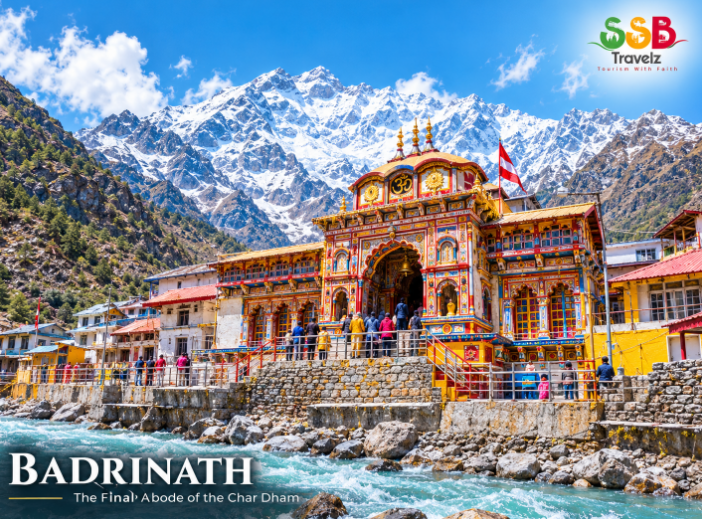
The Badrinath Temple is known for its colourful Garhwali architecture, wooden carvings and gold-gilt roof, with the holy Tapt Kund located nearby. Badrinath is generally open to pilgrims only during the summer and autumn months, before closing for the harsh Himalayan winter.
Badrinath, in the Chamoli district of Uttarakhand, is the fourth and final shrine of the Char Dham Yatra, dedicated to Lord Vishnu in his Badrinarayan form.
Situated at about 3,100-3,300 metres on the banks of the Alaknanda river, the temple's origins trace back to ancient Vedic times, with references in the Vishnu Purana and Mahabharata.
According to legend, Lord Vishnu meditated here while Goddess Lakshmi took the form of a Badri tree to shield him from the cold, giving the site its name.
The temple as it stands today is credited to Adi Shankaracharya, who in the 8th century discovered a black stone idol of Lord Badrinarayan in the Alaknanda river near Tapt Kund and established it for worship.
Over the centuries, the structure has been rebuilt several times by Garhwal kings due to earthquakes and harsh Himalayan weather, including major restoration after the 1803 earthquake.
Built in traditional Garhwali style, the temple features a colourful façade, carved wooden arches, and a distinctive gold-gilt roof. Just outside stands Tapt Kund, a natural hot spring where pilgrims traditionally bathe before entering.
The main deity sits in the garbhagriha alongside idols of Nar-Narayan, Uddhav, Garuda, and Kuber.
Like the other Char Dham shrines, Badrinath remains open only from around April/May to October/November, with the idol moved to Joshimath during the winter closure.