Explore Ayodhya's fascinating history, Ram Mandir, Hanuman Garhi, Kanak Bhawan, sacred Sarayu ghats, festivals and travel tips. Plan your spiritual journey with SSB Travelz.
Ayodhya: A Journey Through the Land of Lord Shri Rama – History, Faith and Divine Experiences
*Some journeys take you to beautiful places. Others take you closer to your faith. Ayodhya is where a journey becomes an experience of devotion, heritage and inner peace.*
Introduction: Where Every Corner Tells a Sacred Story
Imagine standing beside a sacred river as the morning sun slowly illuminates ancient temples. The sound of devotional chants fills the air, bells ring in the distance, and devotees walk with folded hands, whispering the name of Shri Ram.
This is Ayodhya — a city where faith lives in everyday life, where stories from the Ramayana continue to inspire millions, and where every pilgrimage offers an opportunity to pause, reflect and reconnect with what matters most.
Located on the banks of the sacred River Sarayu in Uttar Pradesh, Ayodhya is revered as the birthplace of Lord Shri Rama. It is one of India's most important spiritual destinations and a city deeply woven into the country's religious and cultural identity.
Whether you are a devoted pilgrim, a history enthusiast, or a traveller wishing to discover India's spiritual heritage, Ayodhya welcomes you with a timeless message: walk with faith, live with righteousness, and let every journey teach you something meaningful.
The Glorious History of Ayodhya: A City Rooted in the Ramayana
Ayodhya's story stretches far beyond the temples and streets visitors see today. Its significance is preserved through sacred scriptures, centuries-old traditions, religious practices and generations of storytelling.
The Kingdom of Kosala
According to Hindu tradition, Ayodhya was the magnificent capital of the ancient kingdom of Kosala. The Ramayana describes a prosperous kingdom ruled by King Dasharatha, whose reign is remembered for its grandeur and ideals of good governance.
The city is associated with the Ikshvaku dynasty, a royal lineage traditionally connected with Lord Rama. Ancient Indian literature celebrates Ayodhya as a place of prosperity, beauty and devotion.
For generations, these stories have made Ayodhya more than a geographical destination. It represents the ideal of a kingdom where rulers fulfil their duties and people aspire to live in harmony.
The Birth of Lord Shri Rama
At the heart of Ayodhya's spiritual identity is the story of Lord Shri Rama, revered in Hinduism as the seventh avatar of Lord Vishnu.
According to the Ramayana, Rama was born to King Dasharatha and Queen Kaushalya. His life became an enduring example of courage, compassion, truthfulness, duty and devotion.
His journey was not without challenges. The story of his exile, his separation from Goddess Sita, the unwavering devotion of Lord Hanuman, and the battle against Ravana continues to touch hearts across generations.
Rama's return to Ayodhya after fourteen years of exile is traditionally associated with the celebration of Diwali, the festival of lights. The lighting of lamps symbolises the victory of good over evil and the arrival of hope after darkness.
This is why Ayodhya holds such a special place in the hearts of devotees. Visiting the city is a way to experience the living legacy of a story that has shaped India's spiritual imagination for centuries.
What Does Lord Rama's Life Teach Us?
The significance of Ayodhya extends beyond mythology and religious worship. The values associated with Lord Rama remain relevant in everyday life.
- **Dharma:** The importance of doing what is right, even when it is difficult. - **Respect for family:** The value of love, responsibility and commitment. - **Courage:** The strength to face difficulties without abandoning one's principles. - **Devotion:** The power of faith, loyalty and selfless service. - **Good leadership:** The ideal of placing the welfare of people at the centre of governance.
The concept of Ram Rajya continues to represent an ideal of justice, peace and responsible leadership.
Perhaps this is one reason why millions of people feel a deep emotional connection to Ayodhya. They come not only to offer prayers but also to find inspiration in the timeless values associated with Lord Rama.
Shri Ram Janmabhoomi Mandir: The Spiritual Heart of Ayodhya
No visit to Ayodhya feels complete without learning about the Shri Ram Janmabhoomi Mandir, one of the city's most prominent landmarks.
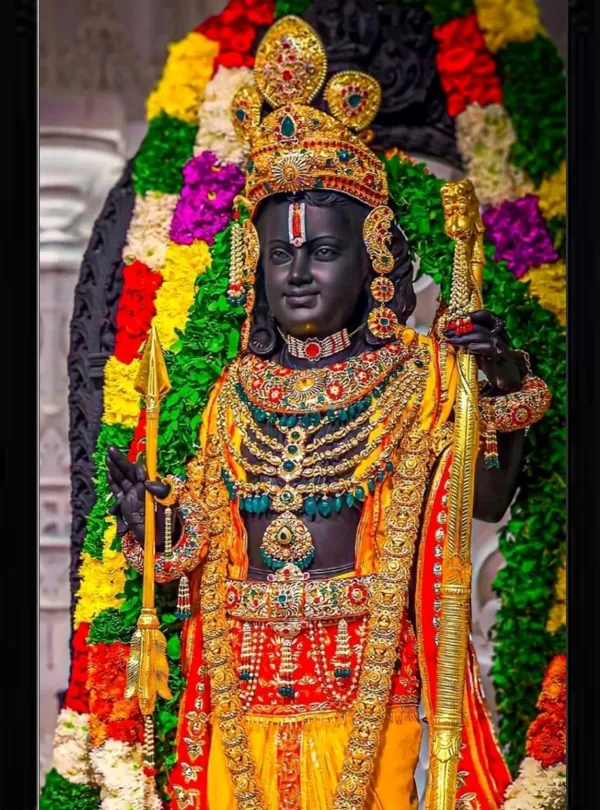
The site is traditionally revered by Hindus as the birthplace of Lord Rama. After a long-running legal dispute, the Supreme Court of India delivered its judgment in November 2019, clearing the way for the temple's construction at the site. The consecration ceremony of Ram Lalla took place on 22 January 2024.
The temple's traditional Indian architecture, intricate stone craftsmanship and imposing structure make it a major destination for pilgrims and visitors interested in India's heritage.
For devotees, the experience of darshan is deeply personal. Some arrive with prayers for their families, others seek strength during difficult times, and many simply wish to stand before Ram Lalla and express their gratitude.
As Ayodhya continues to develop as a pilgrimage destination, the temple remains a central part of the city's spiritual experience.
**Travel tip:** Temple entry procedures, security requirements and visiting arrangements may change. Check current official guidance before travelling.
Places in Ayodhya That Deserve a Place on Your Pilgrimage
Ayodhya's beauty is not limited to one temple. Its sacred riverfronts, historic shrines and traditional religious spaces together create a rewarding pilgrimage experience.
1. Shri Ram Janmabhoomi Mandir – Seek the Blessings of Ram Lalla
Begin your exploration with the city's most celebrated spiritual landmark. Dedicated to Lord Shri Rama, the temple draws pilgrims from across India and beyond.
Take time to understand its religious significance, admire its architecture and experience the atmosphere of devotion surrounding the complex.
For many travellers, this is the most meaningful stop of the entire journey.
2. Hanuman Garhi – A Temple of Strength and Devotion
Dedicated to Lord Hanuman, Hanuman Garhi is one of Ayodhya's best-known temples. Its elevated location and fort-like appearance distinguish it from many other shrines in the city.
Devotees visit to seek courage, protection and strength. According to local tradition, Hanuman watches over Ayodhya and protects the city associated with his beloved Lord Rama.
The temple is often included early in a pilgrimage itinerary, before devotees proceed to the Ram Mandir.
3. Kanak Bhawan – The Beautiful Abode of Rama and Sita
Kanak Bhawan is a revered temple dedicated to Lord Rama and Goddess Sita.
Tradition associates the temple with a palace gifted to Sita after her marriage to Rama. Its decorated interiors and beautiful idols give the shrine a distinctive atmosphere.
Unlike the grandeur of a large pilgrimage complex, Kanak Bhawan invites visitors to appreciate the devotional traditions surrounding the divine couple.
4. Ram Ki Paidi – Experience the Sacred Riverfront
A visit to Ayodhya offers a special opportunity to spend time beside the River Sarayu.
Ram Ki Paidi comprises a series of ghats along the riverfront where devotees gather for prayers, ritual bathing and religious observances.
Visit during the early morning to experience a quieter side of the city, or plan an evening visit to witness the riverfront's devotional atmosphere.
The sound of prayers, the gentle movement of the water and the sight of lamps create an experience that many travellers remember long after returning home.
5. Nageshwar Nath Temple – Discover Ayodhya's Shaivite Heritage
Ayodhya is also home to important temples dedicated to Lord Shiva. Nageshwar Nath Temple, located near Ram Ki Paidi, is one of the city's recognised religious landmarks.
Local tradition connects its origin with Kush, the son of Lord Rama.
Including this temple in your itinerary offers a broader understanding of Ayodhya's diverse religious traditions.
6. Guptar Ghat – A Peaceful Place for Reflection
For travellers seeking a quieter experience, Guptar Ghat is a meaningful place to visit.
Located beside the Sarayu River, the ghat is associated in Hindu tradition with Lord Rama's departure from the earthly world.
Its riverside setting makes it suitable for quiet reflection, prayer and observing the sacred landscape of Ayodhya.
7. Explore Ayodhya's Wider Cultural Heritage
Beyond its most famous temples, Ayodhya offers additional places of religious and historical interest, including Jain temples and sites connected with the region's literary and cultural traditions.
Exploring these locations helps visitors appreciate Ayodhya as a historic city with a rich and diverse heritage.
Ayodhya During Diwali: When the City Glows with Faith
If there is one festival that captures Ayodhya's special connection with Lord Rama, it is Diwali.
According to the traditional Ramayana narrative, the people of Ayodhya welcomed Rama, Sita and Lakshmana home after their fourteen-year exile by lighting lamps.
Today, the festival is celebrated across India, but Ayodhya holds a particularly strong association with this story.
During the festive period, the city may feature illuminated streets, decorative displays, cultural programmes and celebrations along the riverfront. Deepotsav festivities have also become a major attraction.
For visitors, the festival can be an extraordinary opportunity to experience the city's cultural traditions. However, large crowds and changes to access arrangements make advance planning essential.
Ram Navami, which celebrates the birth of Lord Rama, is another significant occasion when devotees gather for prayers and religious observances.
**Planning a festival visit?** Confirm the dates, accommodation availability, traffic arrangements and temple guidance before booking your trip.
The Best Time to Visit Ayodhya
The most comfortable season for many visitors is generally October to March, when daytime weather is often more suitable for temple visits and sightseeing.
**October to November:** A popular period for experiencing the festive atmosphere around Diwali and other seasonal religious events.
**December to February:** Cooler weather can make it easier to explore temples and historic areas. Carry warm clothing for chilly mornings and evenings.
**March to April:** An opportunity to experience Ram Navami celebrations, depending on the Hindu lunar calendar.
Summer can be very hot in Uttar Pradesh. If you travel during warmer months, consider early-morning sightseeing, carry drinking water and allow sufficient time to rest.
Festival dates, temple schedules and crowd conditions vary, so always verify details before departure.
How to Reach Ayodhya
Ayodhya can be reached by air, rail and road, making it accessible to pilgrims travelling from different parts of India.
**By air:** Maharishi Valmiki International Airport in Ayodhya serves the region. Depending on flight availability and your starting city, Lucknow may also be a useful airport option.
**By train:** Ayodhya has railway connectivity to various cities. Check your train's scheduled arrival station carefully when planning transfers.
**By road:** The city is connected by road to Lucknow and other destinations in Uttar Pradesh. Travellers can consider buses, taxis or private vehicles depending on their preferences.
Travel time and transport options depend on your departure point, service schedules and local traffic.
For travellers planning a multi-destination pilgrimage, arranging transport and accommodation in advance can help make the journey smoother.
How to Plan a Meaningful Ayodhya Pilgrimage
A well-planned pilgrimage gives you time to enjoy darshan without feeling rushed.
Here are some practical suggestions:
1. **Decide your travel dates:** Consider the weather, festival calendar and available accommodation. 2. **Plan your temple visits:** Group nearby attractions together to reduce unnecessary travel. 3. **Allow time for darshan:** Queues and security checks can take longer during busy periods. 4. **Choose suitable accommodation:** Staying at a convenient location can make early-morning temple visits easier. 5. **Follow local instructions:** Observe temple rules regarding footwear, photography, mobile phones and personal belongings. 6. **Keep your itinerary flexible:** Allow extra time for traffic, crowds and unexpected changes. 7. **Travel respectfully:** Follow local customs and help keep sacred places and riverfronts clean.
A pilgrimage is not simply about visiting as many places as possible. It is about giving yourself enough time to appreciate each place and the meaning it holds.
Make Your Ayodhya Journey Special with SSB Travelz
Some journeys are remembered for the photographs we bring home. Others stay with us because of the peace, inspiration and happiness we experience along the way.
An Ayodhya pilgrimage can be one of those special journeys.
Whether you are planning a family trip, travelling with friends, organising a group pilgrimage or combining Ayodhya with other sacred destinations, a thoughtfully arranged itinerary can help you focus on the experience rather than the logistics.
At **SSB Travelz – Tourism With Faith**, we help travellers explore spiritual destinations with attention to itinerary planning, transportation, accommodation coordination and sightseeing arrangements.
From discovering the sacred landmarks of Ayodhya to planning a wider pilgrimage across India's spiritual destinations, our aim is to make every journey meaningful and memorable.
Let your next journey be guided by faith.
**Plan your Ayodhya pilgrimage with SSB Travelz and discover the timeless spiritual heritage of India.**
Frequently Asked Questions About Ayodhya
Why is Ayodhya famous?
Ayodhya is best known as the birthplace of Lord Shri Rama according to Hindu tradition. It is an important pilgrimage destination featuring the Shri Ram Janmabhoomi Mandir, Hanuman Garhi, Kanak Bhawan and the sacred Sarayu riverfront.
How many days are enough to visit Ayodhya?
One full day may be sufficient for a brief visit to the major landmarks, depending on queues and transport arrangements. Two days can offer a more relaxed experience and time to explore additional temples and cultural sites.
What are the main places to visit in Ayodhya?
The major attractions include Shri Ram Janmabhoomi Mandir, Hanuman Garhi, Kanak Bhawan, Ram Ki Paidi, Nageshwar Nath Temple and Guptar Ghat.
When is the best time to visit Ayodhya?
October to March is generally a comfortable period for sightseeing. Visitors interested in Ram Navami or Diwali celebrations should check the festival dates and make advance arrangements.
Can Ayodhya be combined with other pilgrimage destinations?
Yes. Depending on the available time, travellers may combine Ayodhya with destinations such as Varanasi and Prayagraj. A suitable itinerary depends on travel duration, transport connections and the places you wish to visit.
Final Thoughts: Let Faith Lead the Way
Ayodhya is more than a destination on a map. It is a place where ancient stories continue to inspire modern lives, where devotion brings people together, and where the values associated with Lord Shri Rama remain meaningful across generations.
From the grandeur of Ram Janmabhoomi Mandir to the peaceful banks of the Sarayu, the city offers countless opportunities to experience India's spiritual heritage.
Whether you visit to seek blessings, learn about history, celebrate a festival or spend meaningful time with your family, Ayodhya offers a journey worth remembering.
**Your next spiritual journey begins with a single step. Let SSB Travelz help you take it.**
**Jai Shri Ram!**
*SSB Travelz – Tourism With Faith. Explore sacred destinations, create beautiful memories and travel with purpose.*