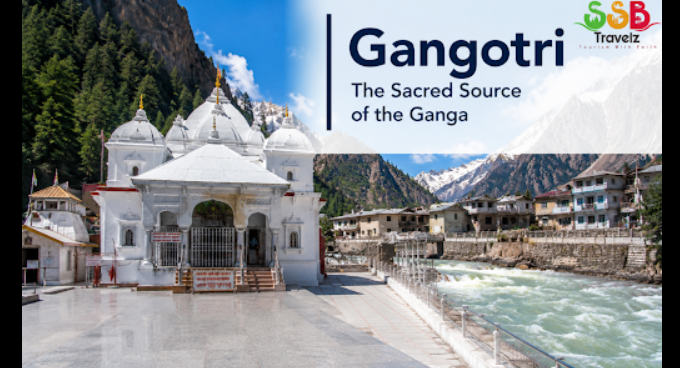
The beautiful Gangotri Temple, located on the banks of the Bhagirathi River, is the spiritual heart of the region. Pilgrims also visit Gaumukh, the source of the Gangotri Glacier and the origin of the Bhagirathi River. Surrounded by majestic Himalayan peaks, flowing rivers and pristine natural beauty, Gangotri is a perfect blend of spirituality, devotion and breathtaking Himalayan landscapes. 🙏🏔️
Gangotri, located in the Uttarkashi district of Uttarakhand, is the second shrine on the traditional Char Dham circuit, visited after Yamunotri.
Sitting at an altitude of around 3,100 metres on the banks of the Bhagirathi river, the temple is dedicated to Goddess Ganga. The simple granite structure was built by the Gurkha general Amar Singh Thapa in the 18th century and was later renovated by the king of Jaipur, who added Rajasthani-style pavilions known as chhatris. Unlike some of the other Char Dham shrines, Gangotri temple itself requires no trek to reach, as it is accessible directly by road.
Near the temple stands Bhagirath Shila, a flat rock where King Bhagirath is believed to have performed penance to bring the Ganga down to earth, according to Hindu legend. Every evening, the temple holds a Ganga Aarti, where the river is worshipped with a large multi-flame lamp, similar to the tradition seen at Haridwar and Varanasi.
While the temple marks the spiritual origin of the Ganga, its actual glacial source lies about 18-19 km further up at Gaumukh, where the Bhagirathi river emerges from the Gangotri Glacier. This trek passes through deodar and pine forests, with Chirbasa and Bhojbasa serving as stops along the route, and requires prior permits due to its location within Gangotri National Park.